Catalog
Search
619 products
View:
- Selected: 1Areas of use
- Selected: 0Item names
- Selected: 0Manufacturer
- Selected: 0Made in
- Selected: 0Additional
View:
619 products
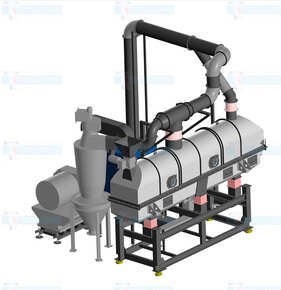
Vibroconvection dryer VKS-100/1,7
Vibroconvection dryer VKS-100/1,7 with a capacity of up to 100 kg / h for heating and drying bulk, granular and powdery materials in a vibrating boiling (fluidized) layer, in continuous and periodic mode.
Vibroconvection dryers "VKS" are designed for heating and drying bulk, granular and powdery materials in a vibrating boiling (fluidized) layer, in a continuous and periodic mode.
This is a type of fluidized bed in which mechanical vibration increases the productivity of the fluidization process, accelerates the process of heat and mass transfer, which ultimately leads to a reduction in the drying time of the product.
Tula-Term
Tula
Produced in: Tula
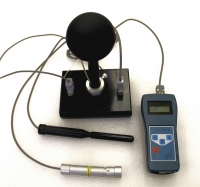
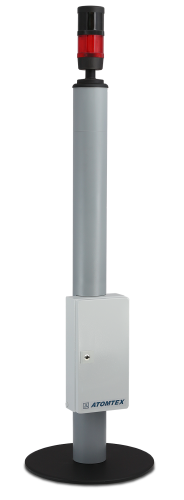
RADIATION PEDESTRIAN MONITORS MPP‑AT920V, MPP‑AT920R (SRK‑AT2327)
Rapid adaptation to changes in the radiation background
Audible and light alarms
The possibility to create a network of MCI (up to 32) under the control of a PC and specialized software
Mobility and the possibility to organize the control of passages in a short time
High reliability and self-control
Backup power supply
Atomtekh
Minsk
Produced in: Belarus, Minsk
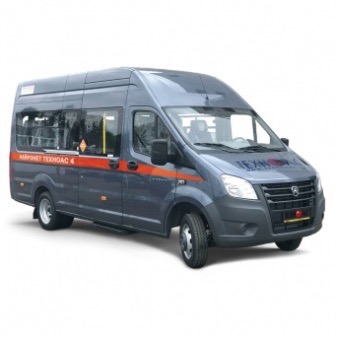
Mobile laboratory NEURONET TECHNOAS 4 based on Gazelle Next
Purpose of the NEURONET TECHNOAS 4 Laboratory
• – Universal educational complex of modern educational technologies;
• – Mobile remote and educational office for the working coherence of the subjects of activity.
The use of the NEURONET TECHNOAS 4 laboratory
• – Hardware and software complex based on multifunctional neuro-modular systems of electroencephalographs-recorders "Encephalan-EEGR-19/26";
• – Improving the productivity and profitability of the work of teams with physio-psychological diagnostics and correction, with machine neuro-training on biofeedback;
• – Biophysical individual adjustment of the central nervous system;
• – Conscious development of new reflexive meaningful states, rapid assimilation of new knowledge, skills, skills and actions;
• – Reduction of dangerous influences of the human factor in responsible professions (aviation and others);
• – Improving the effectiveness of educational programs for special education, retraining and advanced training.
NEURONET TECHNOAS 4 Laboratory Support System
• – MKZ safety control module;
• – Mass switches in all compartments;
• – Smart Home system, continuous monitoring of all life support systems with video recording;
• – Audible alarm;
• – Light alarm;
• – An autonomous power source from batteries with a 12/220 V voltage converter;
• – 12 V - 220 V sockets;
• – Hardware and software complex of neuro-modular systems of electroencephalographs-recorders "Encephalan-EEGR-19/26";
• – Hardware and software complexes of modern educational technologies integrated with the Central Control Unit (central control unit).
TEKHNO-AS
Kolomna
Produced in: Kolomna, Moscow region
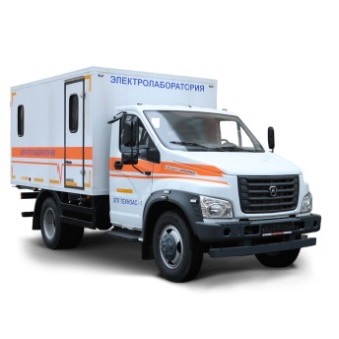
Combined mobile laboratory up to 35 kV (ETL-35K)
The combined laboratory up to 35 kV (ETL-35K) consists of:
1. Test facility
• – Maximum rectified voltage up to 70 kV;
• – Maximum AC voltage of the industrial frequency of 50 Hz to 100 kV.
2. Insulation parameters meter
• – Transformation coefficient;
• – No-load losses at low voltage;
• – Short circuit resistance;
• – Voltage and current;
• – Power factor;
• – Frequency of the measured voltage (current);
• – Phase shift angle between voltage and current;
• – Measurement of the active resistance of the windings.
3. Burning facility
• – Maximum voltage up to 30 kV;
• – Maximum current up to 80 A;
• – Working hours are not limited;
• – Switching of stages is carried out without breaking the arc at the time of switching;
• – The ability to start working from any stage of burning (when working with low-voltage cables);
• – Built-in afterburning.
4. High voltage pulse generator
• – Output voltage 0...12 kV / 0...24 kV;
• – The pulse energy at each stage is 3000 J;
• – Built-in IDM for collaboration with the reflectometer.
5. Reflectometer
– Supports 3 methods of determining the location of damage:
• – By pulse reflectometry;
• – By the method of oscillatory discharge;
• – Pulse-arc method.
6. High-voltage cable defects detector
• – Determining the location and depth of the cable at a depth of up to 10 m;
• – Tracing at a distance of up to 10 km;
• – Search for live electrical cables;
• – Search for places where pipelines and cables intersect;
• – Determining the places of damage to cable lines;
• – Site surveys before excavation;
• – Search for places of damage to the external insulation of the cable;
• – GPS\GLONASS coordinates recording and mapping of found communications;
• – Cable selection from the bundle;
• – Search for the place of damage by acoustic method.
TEKHNO-AS
Kolomna
Produced in: Kolomna, Moscow region
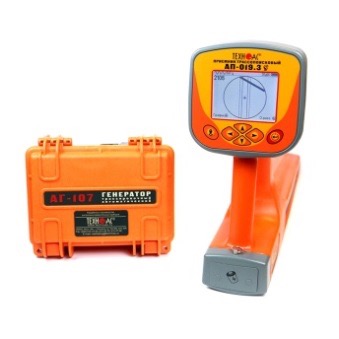
Trace searcher with the function of saving GPS/GLONASS coordinates Success AG-309.30K
from
244 260 ₽
The trace searching kit is designed to accurately determine the location and depth of underground utilities (power and signal cable lines, reinforced fiber-optic lines, pipelines made of electrically conductive materials), troubleshooting cable lines, and also allows you to conduct a survey of the area in the shortest possible time and with great reliability before excavation and to prevent damage to engineering communications.
As part of the kit, the receiver is in the form of a monoblock with a large LCD display, which displays an image of the route and automatically calculates the depth of communication up to 10 m, as well as the current in the line. Built-in GPS\GLONASS module for determining and recording the coordinates of the location of communication. "Probe" mode for tracing NON-METALLIC communications using an in-line generator (optional).
The kit is equipped with the latest compact autonomous generator AG-107 with built-in batteries, display and built-in induction antenna, for tracing communication in a contactless way.
The output power of the generator is up to 60 watts.
TEKHNO-AS
Kolomna
Produced in: Kolomna, Moscow region
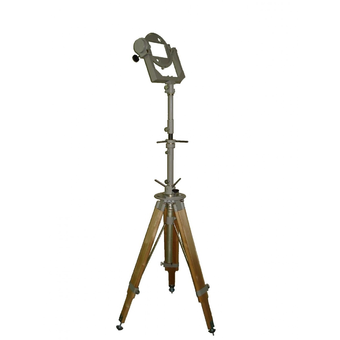
Support-rotary device OPU-1
Technical specifications:
Azimuth rotation angle from 0° to 360° with vernier ± 15°
The angle of rotation according to the angle of the place from minus 30° to plus 90°
The angle of the polarization plane is from minus 5° to plus 95°
The installation height of the axis of the orientation mechanism is from 1.15 to 2.1 m in the version of USHIAI.301554.001 and from 1.4 to 2.35 m in the version of USHIAI.301554.001-01
Smooth adjustment of the height of the axis of the orientation mechanism 0.15 m
In terms of strength under climatic and mechanical influences, the tripod complies with the norms of group 6 GOST 22261-94
The overall dimensions of the tripod are - 2080x2080x2100 mm (USHIAI.301554.001), – 2080x2080x2350 mm (USHIAI.301554.001-01) (shown in the unfolded state at maximum height. The size Ø2080 is the diameter of the circumscribed circle along the vertices of the triangle occupied by the tripod on a horizontal platform)
Operating conditions of the tripod:
ambient temperature from minus 50 to plus 60oC
Tripod weight – 20.5 kg (USHIAI.301554.001), 21.5 kg (USHIAI.301554.001-01)
MNIPI
Minsk
Produced in: Belarus, Minsk
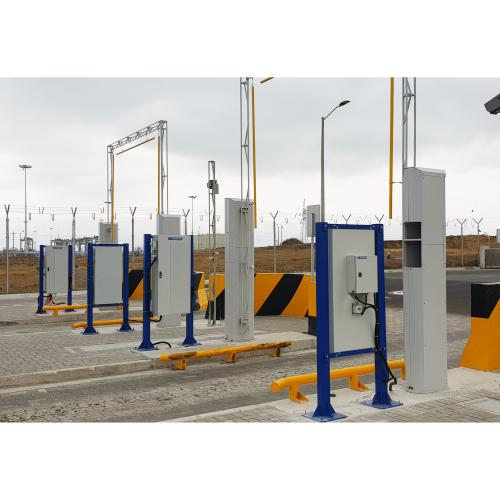
RADIATION TRANSPORT MONITORS (SRK‑AT2327)
Modular principle of system construction
Automatic correction of threshold levels when the background level of the environment changes
High reliability and self-control
Backup power supply
Automatic data logging
The possibility of connecting a video surveillance system
Atomtekh
Minsk
Produced in: Belarus, Minsk
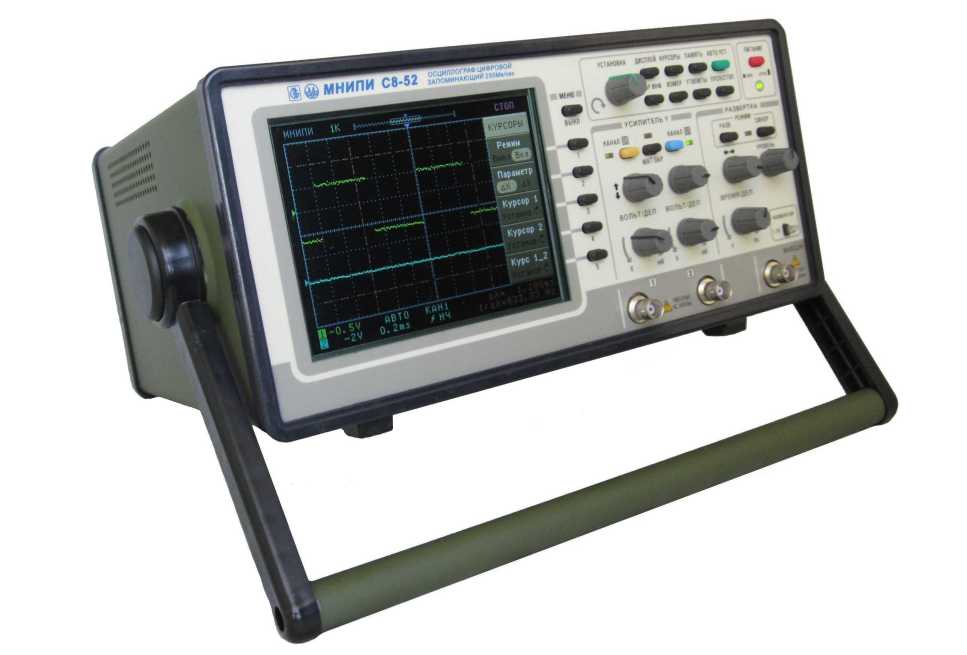
Digital oscilloscope S8-52
Designed to study and measure the parameters of electrical signals in the frequency band from 0 to 120 MHz.
Technical specifications:
Number of channels 2
120 MHz bandwidth
Sampling rate 250 MHz
Equivalent sampling rate of 10 GHz
Rise time of PH <= 2.9 ns
Input active resistance (1±0.02) Mom
Input capacitance <= 25 pF
120 MHz bandwidth
2 channels, external synchronization input
Vertical sensitivity 2 mV/div
Sampling rate up to 250 Mbps, in real time
Recording length up to 16K counts in each channel
Color LCD screen with LED backlight
Cursor and automatic measurements
USB and RS-232 interface
MNIPI
Minsk
Produced in: Belarus, Minsk
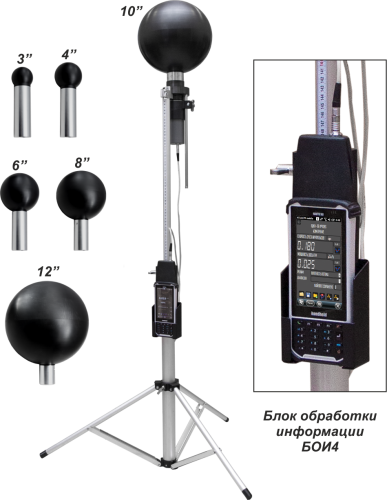
DOSIMETER‑RADIOMETER MKS‑AT1117M WITH DETECTION UNIT BDKN‑06 AND A SET OF RETARDER SPHERES
The result of determining the energy distribution of the neutron radiation flux density is used to calculate such quantities as:
- integral neutron flux density;
- the average energy of neutron radiation in the spectrum;
- the average neutron radiation energy by dose;
- dose equivalent per unit flow density;
- dose equivalent;
- effective dose.
▪ Methodological support of measurements
▪ It is possible to supply an expanded set of polyethylene retarder spheres with diameters: 3,5”; 4,5”; 5”; 7”; 9”; 9,5”
Atomtekh
Minsk
Produced in: Belarus, Minsk
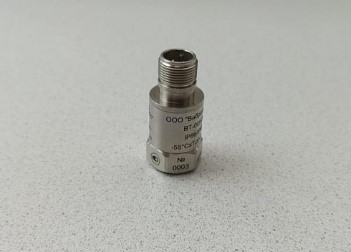
Vibration converter VT-005
The VT-005 vibration transducers are designed to convert the instantaneous value of the vibration acceleration of an object into an ICP signal of the IEEP standard.
VIBROPRIBOR
Yaroslavl
Produced in: Yaroslavl
Membrane nitrogen stations
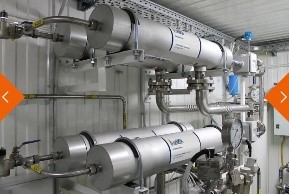
A membrane nitrogen station is a set of equipment for the production and supply of nitrogen under high pressure obtained from atmospheric air by the method of membrane separation. Unlike the membrane nitrogen plant, the membrane nitrogen station is equipped with additional equipment: a booster compressor that creates the necessary pressure. Put the squeeze on the pump.
Composition of a typical membrane nitrogen station:
1. Air compressor
2. Dehumidifier
3. Main filter block, including coal column
4. Air receiver
5. Membrane nitrogen generator
6. Nitrogen receiver
7. Nitrogen booster compressor putting the squeeze on
PROVITA
Saint Petersburg
Produced in: Saint Petersburg