Catalog
Search
78 products
View:
- Selected: 0Areas of use
- Selected: 0Item names
- Selected: 0Manufacturer
- Selected: 0Made in
- Selected: 1Additional
View:
78 products
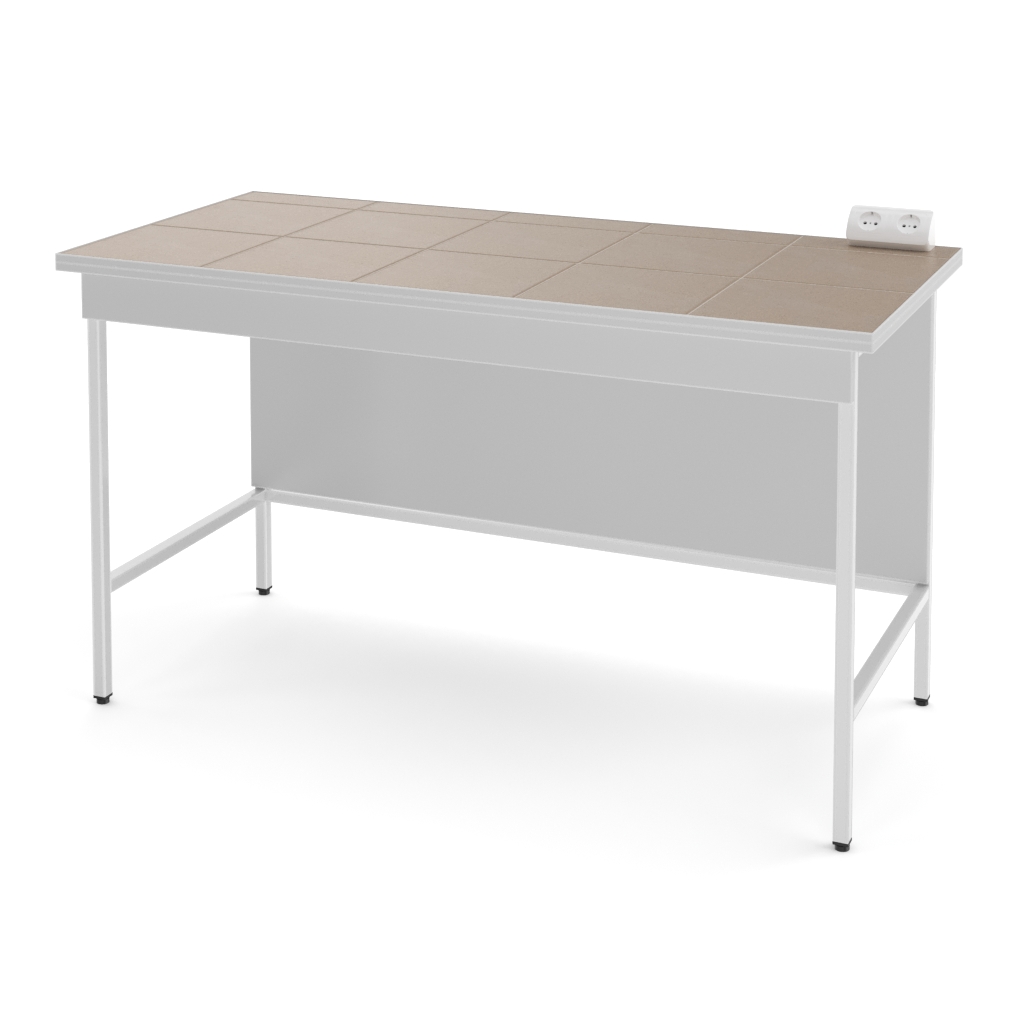
NV-1500 LX-O Table for chromatograph (1500×700×850)
from
20 657 ₽
The NV-1500 LX-O are specialized laboratory tables on a reinforced metal frame with a countertop width of 1500 mm. They are designed to accommodate heavy instruments, such as chromatographs or other analytical equipment.
In the upper right corner of the table there is an electric panel with two sockets. Both sockets with grounding and shutters are designed for current up to 16 A and voltage up to 250 V.
Working surface material: porcelain tile. It is moisture-resistant and perfectly withstands high temperatures. It is resistant to prolonged exposure to concentrated acids, alkalis and organic solvents. It has limited resistance to hydrofluoric acid. This is one of the most popular types of countertops for laboratory furniture.
The tables have a metal frame painted with durable powder paint. The side laminated panels (chipboard with a thickness of 16 mm) are edged with a durable PVC edge with a thickness of 2 mm, which increases their impact resistance and mechanical strength.
The legs of the table are adjustable in height within two centimeters, allowing you to place it even on a rather uneven floor.
Dimensions of the table when assembled: 1500×700×850 mm. It is designed for standing work.
NV LAB
Moscow
Produced in: Moscow, Moscow region
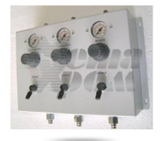
GAS PANEL
The gas distribution panel (hereinafter referred to as the panel) is designed to connect gas nodes and blocks of various analytical instruments, including chromatographs to shop gas lines.
technical specifications
Inlet pressure, not more than 0.8 MPa.
The output pressure is from 0 to 0.4 MPa.
Gas flow rate through each channel, not less than — 1000 cm3/min.
NPF "META-KHROM"
Yoshkar-Ola
Produced in: Yoshkar-Ola, Mari El
SPEAKER SWITCHING DEVICES
To switch the nozzle columns, conventional taps (reverse purge, 6-, 8- and 10-port) are used, which, however, are not suitable for switching capillary columns. An alternative way to switch capillary columns is to change the flows in the capillary columns, which is produced by the so-called "Dins switches" (PD).
TECHNICAL CHARACTERISTICS of PD
The switching time setting range is from 0.1 to 999 min.
Switching time is 0.1 s.
The dead volume of the crane is less than 1 µl.
The temperature of the tap is no more than 350 °C.
The pressure in the crane line is not more than 0.4 MPa.
Electric power supply — 5 V.
NPF "META-KHROM"
Yoshkar-Ola
Produced in: Yoshkar-Ola, Mari El

Flame Photometric(FD)
Selective detector for phosphorus and organosulphide compounds. It is used mainly for the analysis of sulfur-containing substances (hydrogen sulfide, mercaptans, thiophenes, etc.). The sensitivity for sulfur reaches 0.1. ppm. In addition, PFD has sufficient sensitivity and selectivity to compounds containing nitrogen, boron, tin, chromium, selenium, germanium, as well as CO, POPS, MgOx, $02, Ma, NOT C52. The selectivity of 5-containing compounds to hydrocarbons is 105.
Technical characteristic:
8,0*10-13 g5/s by sulfur
1.0*10`13 g/s for phosphorus
NPF "META-KHROM"
Yoshkar-Ola
Produced in: Yoshkar-Ola, Mari El
Electronic Gripper (E3D)
Selective detector for organochlorine compounds and other halogens. It is also
sensitive to compounds containing oxygen, phosphorus or aromatic rings, but to a lesser extent. Paraffins and simple hydrocarbons almost do not capture electrons and are not registered. The selectivity to hydrocarbons is 108. It is available in two versions — conventional EDD and micro-EDD,
mainly for capillary columns (the second version is characterized by increased
sensitivity). The level of fluctuation noise is up to 300 MV, the maximum signal is up to 5 V, the design of the ECD allows the use of argon, helium, and hydrogen as a carrier gas, in addition to nitrogen.
Technical characteristic:
4.0*10-15 g/s for lindane
NPF "META-KHROM"
Yoshkar-Ola
Produced in: Yoshkar-Ola, Mari El
TRANSFORMER OIL INPUT DEVICE
When determining the total gas content (air) and humidity of transformer oil, direct injection of transformer oil into the evaporator of the chromatograph is used. The sample volume is up to 25 µl, the evaporator temperature is 250-350 °C. The main problem with such an input is the protection of the chromatographic column from transformer oil. For this purpose, a special evaporator is used with the possibility of oil accumulation at the bottom of the evaporator and its subsequent discharge, and a replaceable pre-column that protects the column from oil residues that have passed the evaporator.
technical specifications
The volume of the evaporator is 10 ml.
The number of replaceable pre—columns in the device kit is 5.
The temperature of the evaporator is from 250 to 350 °C.
The possibility of draining the transformer oil accumulated in the evaporator.
NPF "META-KHROM"
Yoshkar-Ola
Produced in: Yoshkar-Ola, Mari El
Thermionic (TID)
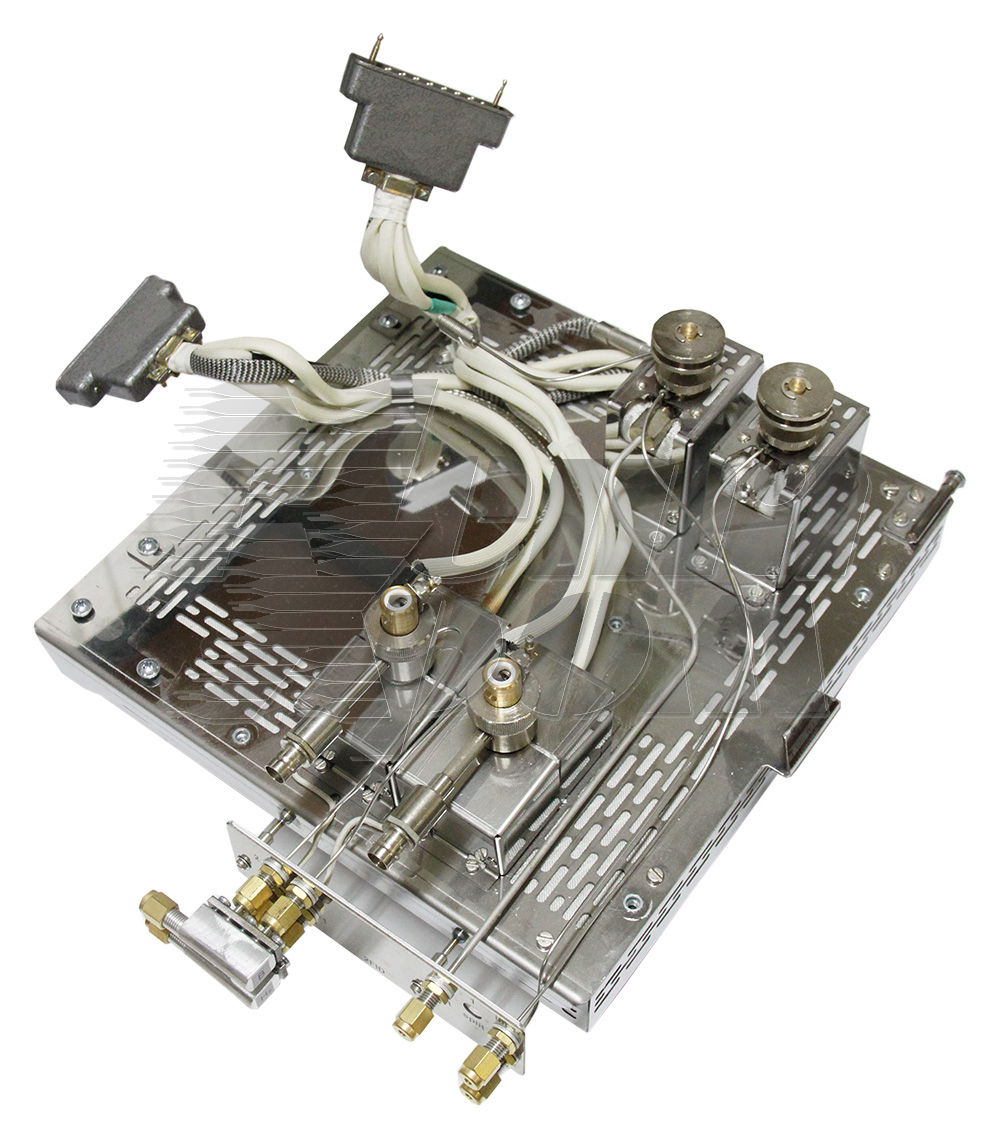
Selective detector for organophosphorus and nitrogen compounds. It is also sensitive to compounds containing C, Az, but to a lesser extent. The sensitivity depends on the number of heteroatoms in the molecule. Selectivity to hydrocarbons is 104 for nitrogen, and 105 for phosphorus
Technical characteristic:
2.0*10-13 m/s nitrogen
1.5*10`14 g/s for phosphorus
NPF "META-KHROM"
Yoshkar-Ola
Produced in: Yoshkar-Ola, Mari El
Pulsating Discharge Detector(PRD)
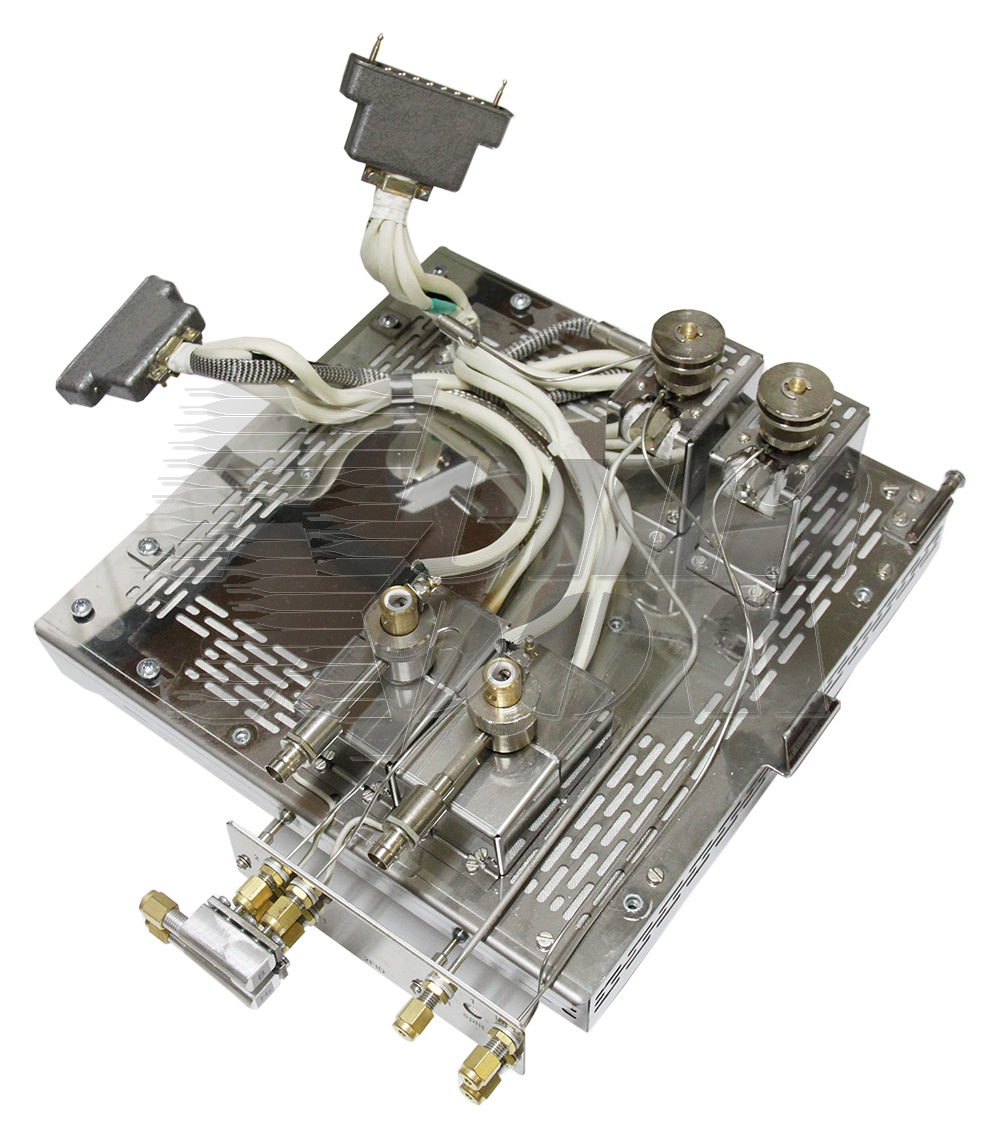
It operates in the mode of a helium ionization detector (GID) and is considered the most sensitive device for determining permanent gases. In addition, it is able to work in the EDD mode.
Technical characteristic:
2.0*10`13 g/s by. methane or hydrogen
NPF "META-KHROM"
Yoshkar-Ola
Produced in: Yoshkar-Ola, Mari El
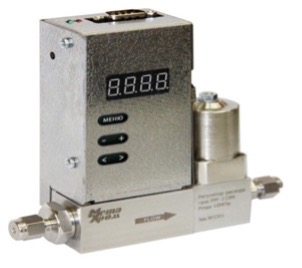
High pressure gas flow regulator RRG-VD
It can be used as a primary source of carrier gas, since it is equipped with an additional gas purification system. This device is especially relevant when, for some reason, helium is not available to the consumer (for example, when working with a thermal conductivity detector - an accident). Due to the high thermal conductivity of hydrogen, TTP operates with significantly greater sensitivity than helium.
NPF "META-KHROM"
Yoshkar-Ola
Produced in: Yoshkar-Ola, Mari El
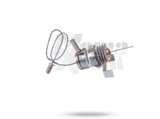
COOLING LPG SV
Device for dosing of liquefied gases is made for insertion of liquids and liquefied gases under the pressure of 7 MPa into the chromatograph. Injection of liquefied gas without de-gassing is provided by cooling of valve, and it greatly reduces inaccuracy of the analysis results.
Cooling temperature is set by temperature regulator. Visual control of absence of de-gassing and flow control of the analyzed fluid is provided. Dose volume is form 0.2 to 2 mcl. Valve of VICI production or dispenser valve of our own production is used directly as a sample-valve.
NPF "META-KHROM"
Yoshkar-Ola
Produced in: Yoshkar-Ola, Mari El
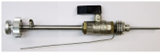
THERMAL DESORBER TDS-2
TDS-2 is a syringe (see Fig. 1), which is installed on the evaporator of the chromatograph. The device is equipped with a crane that cuts off the carrier gas line when removing the rod with the sorption tube from the thermal desorber. When the tap is open, the stem is lowered to the lower position and the sorption tube is inserted into the evaporator brought to the desired temperature. In the conditions of the upper position of the rod, it is also possible to displace air by purging the sorption tube with a carrier gas.
Technical characteristics of TDS-2
The heating time to the desorption temperature is no more than 1 sec.
The cooling time when moving to a cold zone is no more than 10 seconds.
Outer diameter 5-0.1 mm
Dimensions of the sorbent chamber: diameter 3.4+0.3 mm
length 52 mm (470 µl)
Volume (for solid samples) 90 µl
Operating temperature ranges* from 50° to 400 °C
Overall dimensions (height with the rod fully extended) 320 mm.
Weight 0.325 kg.
NPF "META-KHROM"
Yoshkar-Ola
Produced in: Yoshkar-Ola, Mari El